
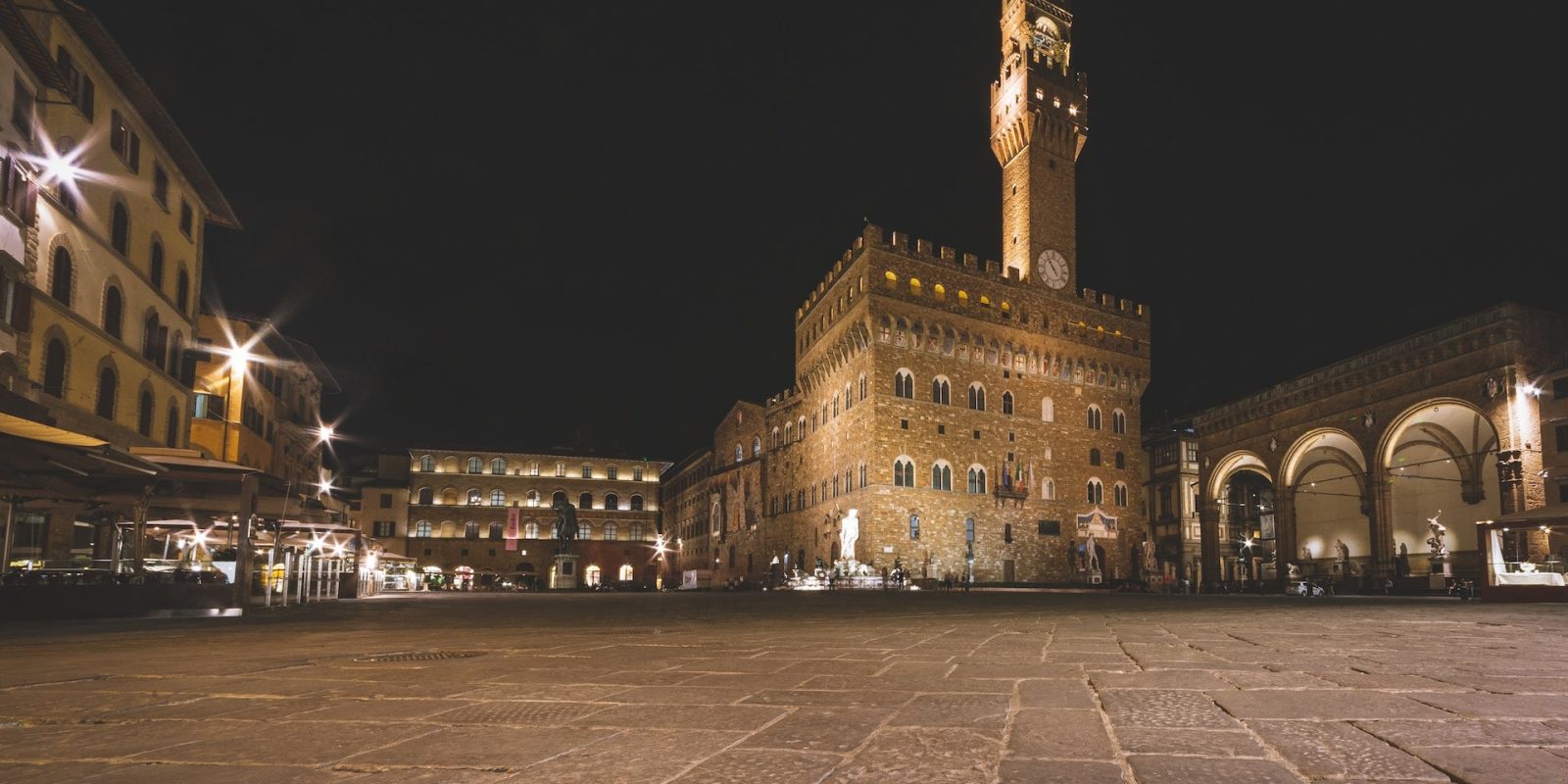
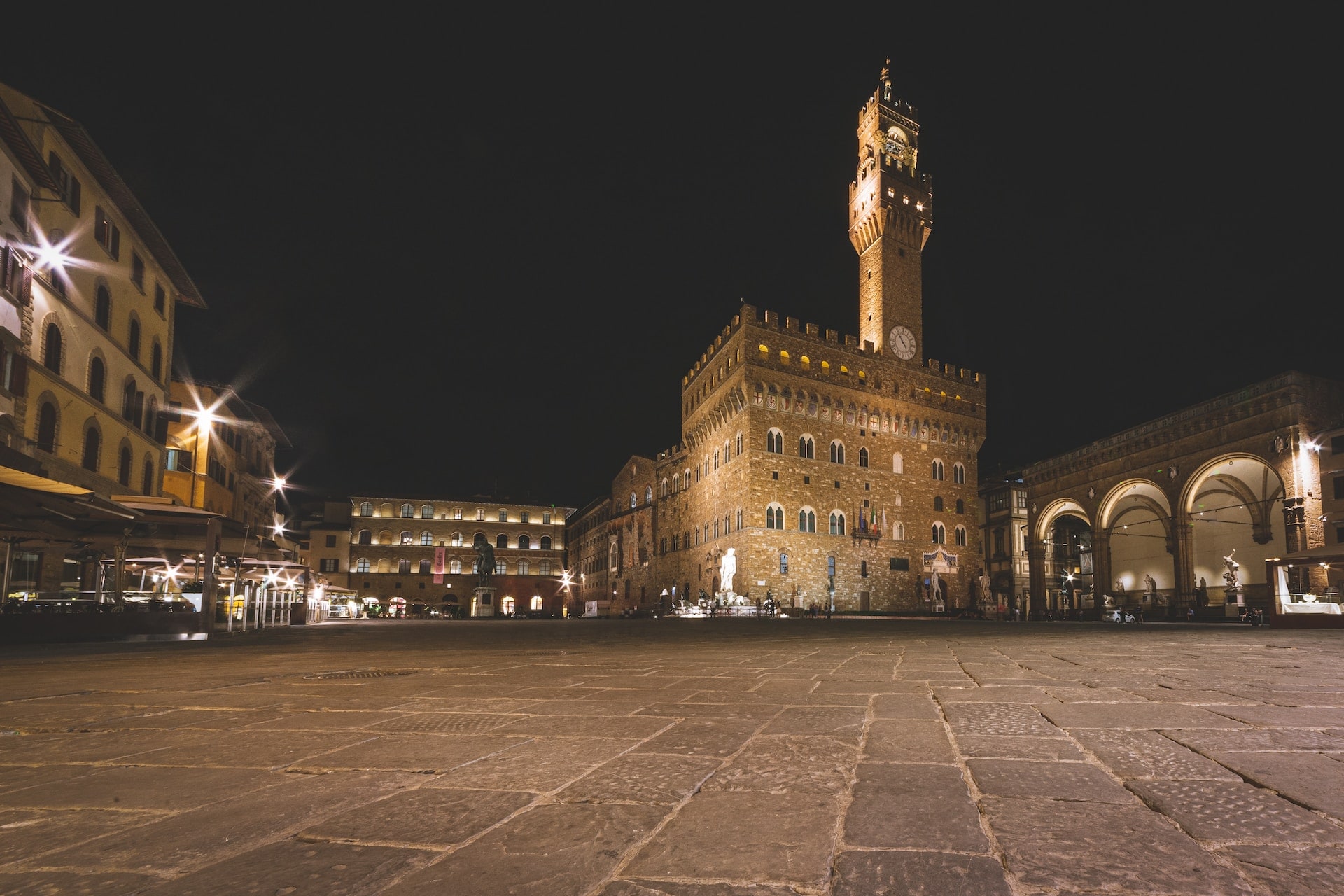
Piazza della Signoria
This piazza has always represented the political heart of Florence. As soon as you arrive, you will notice its unusual L-shape, a configuration that dates back to the second half of the thirteenth century, when the Guelf party, having regained control of the city, decided to raze to the ground the 36 buildings in the square that belonged to their Ghibelline rivals. Hence its peculiar shape.
In Piazza della Signoria you will see the Palazzo Vecchio, the Loggia dei Lanzi and Neptune’s Fountain. The first of these has served as the city hall for centuries: indeed between 1865 and 1871 it was the Parliament building of the newborn Kingdom of Italy. The palazzo has not always borne its current name, but has variously been known as the Palazzo dei Priori, Palazzo della Signoria and the Palazzo Ducale, before being definitively named the Palazzo Vecchio in 1565, when Duke Cosimo I moved his court to the Palazzo Pitti. A great many artists have worked on its interiors over the centuries, embellishing it with precious works of art: Bronzino, Ghirlandaio, Giorgio Vasari, Michelangelo, Donatello and Verrocchio, to name just a few. Having undergone extensive restructuring, it today functions as Florence’s town hall.
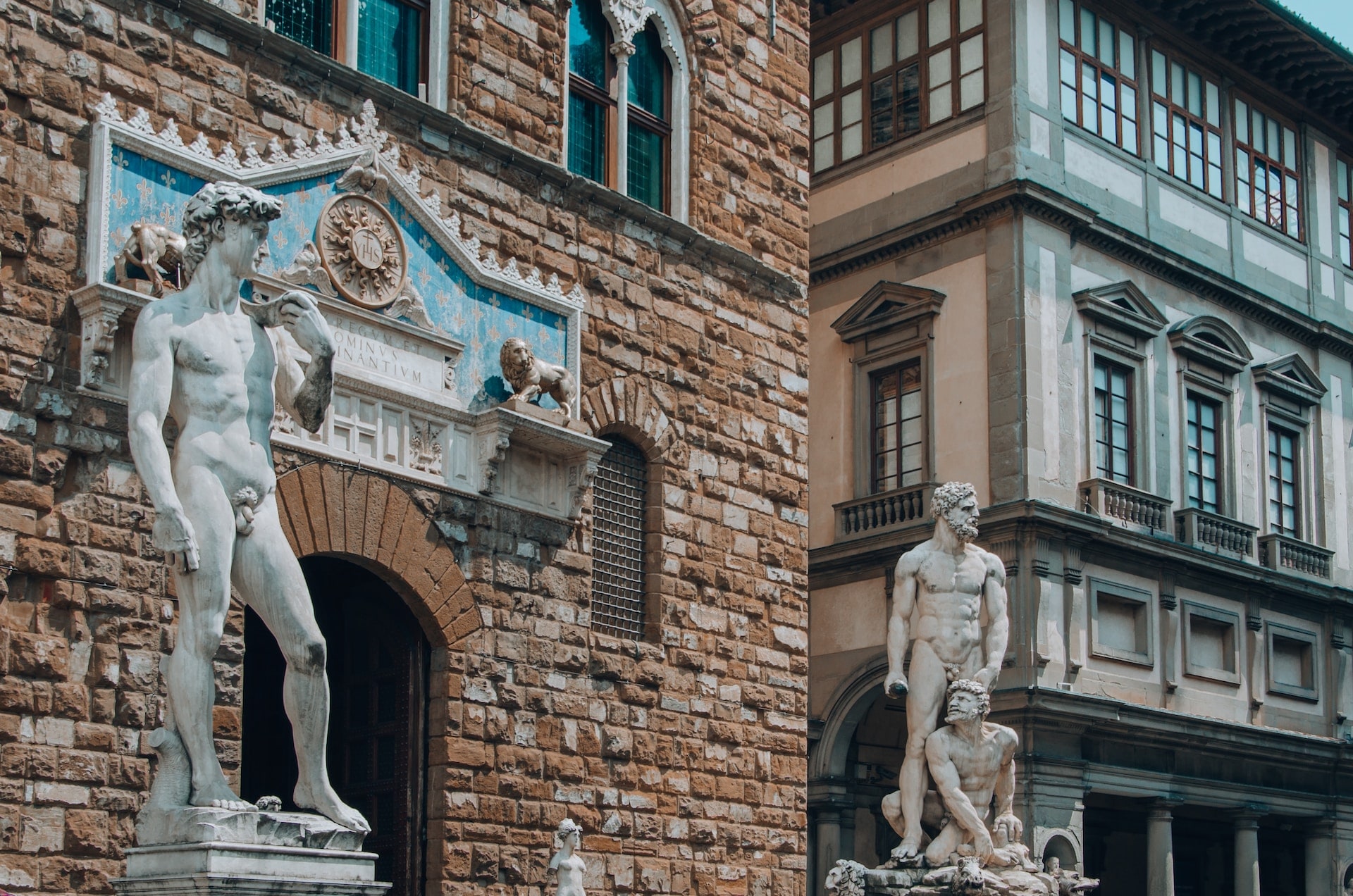
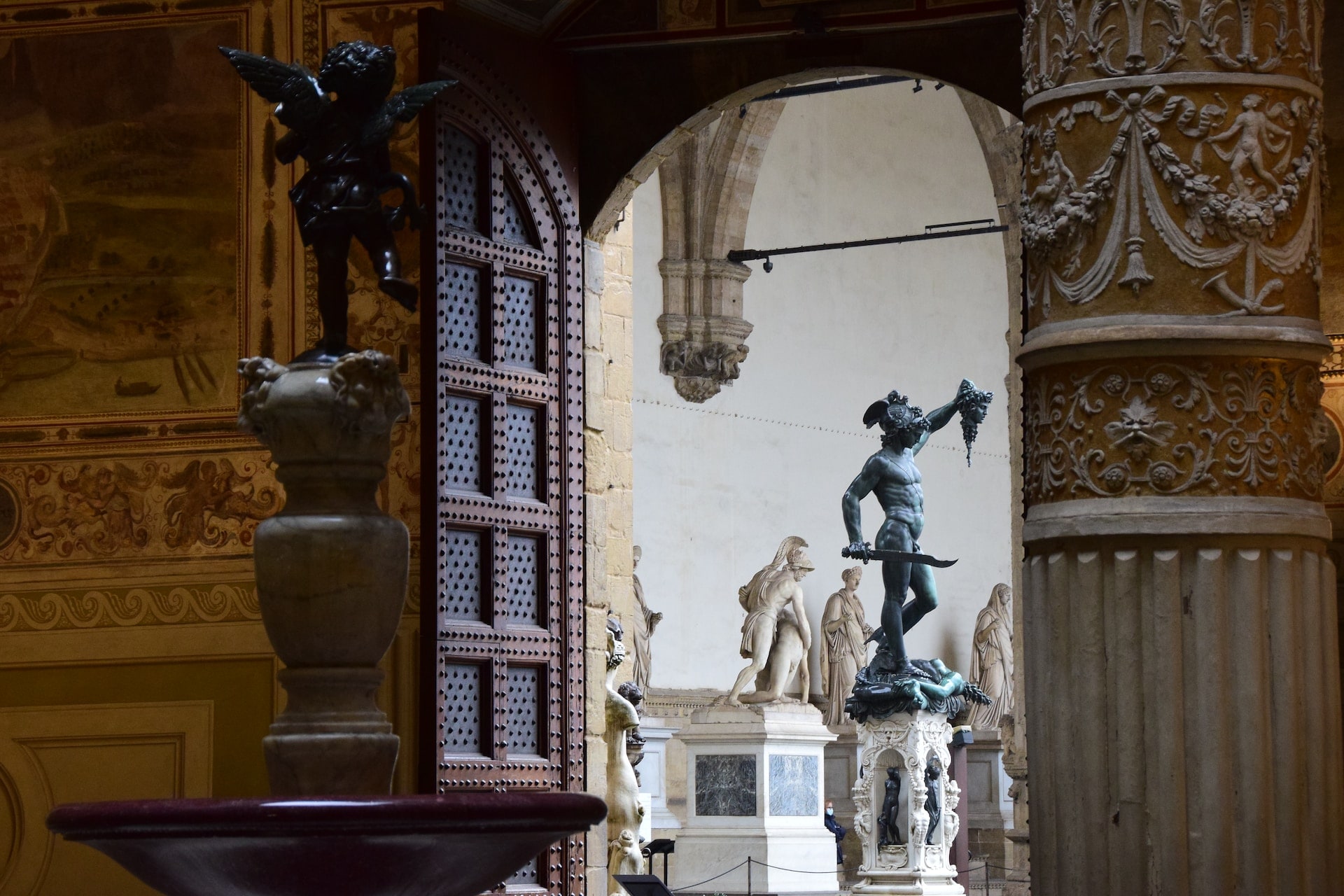
Opposite the Palazzo Vecchio we find the Loggia dei Lanzi, a true outdoor museum, where you can admire masterpieces like Benvenuto Cellini’s Perseus and Giambologna’s Rape of the Sabine Women.
Staying in the piazza, it is impossible not to be enchanted by Neptune’s Fountain, designed by Bartolomeo Ammannati and inaugurated in 1565 to mark the wedding between Francesco I de’ Medici and Grand Duchess Joanna of Austria. Inside the Palazzo Vecchio you can still read a plague, dated 1720, that gives the rules for using the fountain. It is forbidden, it reads, “to dirty the fountain in any way, to wash inkpots, clothes or anything else in it, or to dispose of timber or other waste.” A little insight into the customs of times past.
A few steps from the Piazza della Signoria, you should walk across the Ponte Vecchio, one of the symbols of the city and the oldest of the bridges that span the River Arno. Its first incarnation was probably erected during the Roman period, but it was rebuilt in 1345 by either Taddeo Gaddi or Neri di Fioravante. Ever since 1593 the bridge has been home to the city’s jewellers and goldsmiths, which makes the Ponte Vecchio the perfect venue for a day of shopping.
